The available human safety research is limited. That does not prove pine pollen is unsafe, but it does mean that personal health history, medications, allergies, product format, and intended use deserve consideration.
The most useful question is not simply, “Is pine pollen safe?” It is:
Is there something about my health, medications, or the product itself that makes professional advice worthwhile before I use it?
For several groups, the answer is yes.
Key Takeaways
- People with a known pine pollen allergy should speak with an allergist before deliberately consuming pine pollen.
- Severe pine nut allergy, asthma associated with pollen exposure, pregnancy, breastfeeding, childhood, prescription medication use, and upcoming surgery all warrant additional caution.
- Pine-pollen-specific interaction and long-term safety studies in humans are limited.
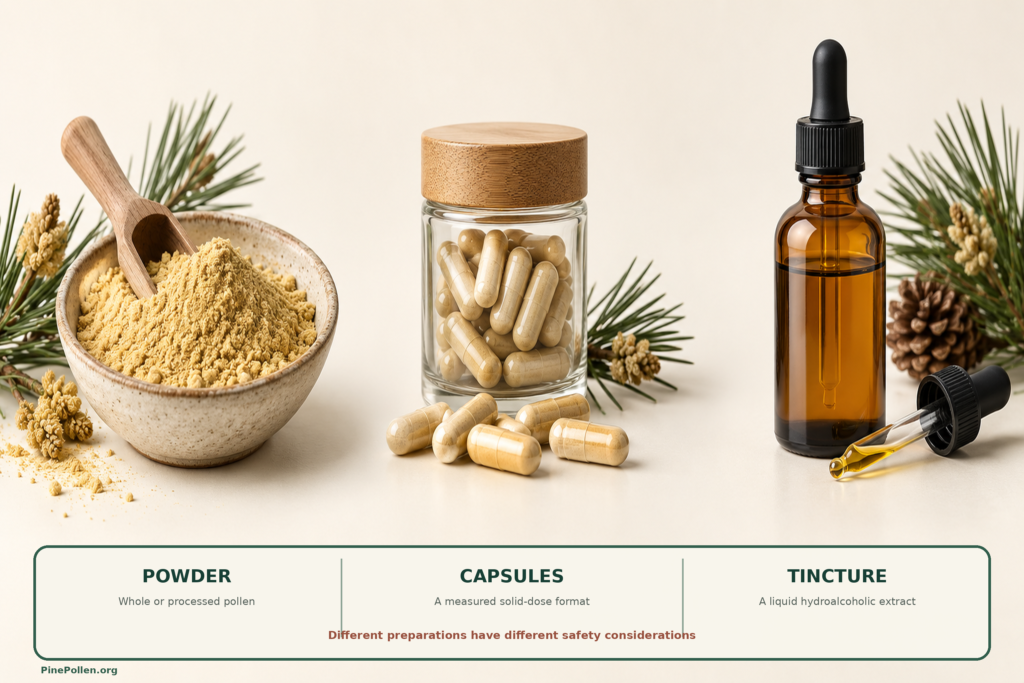
- Powder, capsules, and tinctures are different preparations; tinctures may also contain alcohol.
- Pine pollen should not replace diagnosis or established treatment for a medical condition.
- Breathing difficulty, throat or tongue swelling, fainting, or suspected anaphylaxis requires emergency medical care.
Table of Contents
- Who should speak with a clinician first?
- Allergies and asthma
- Pregnancy, breastfeeding, and children
- Medications and supplement combinations
- Hormone-sensitive conditions and hormone therapy
- Medical conditions, surgery, and alcohol
- Using pine pollen to treat symptoms or disease
- Who should you ask?
- When symptoms require urgent help
- Frequently asked questions
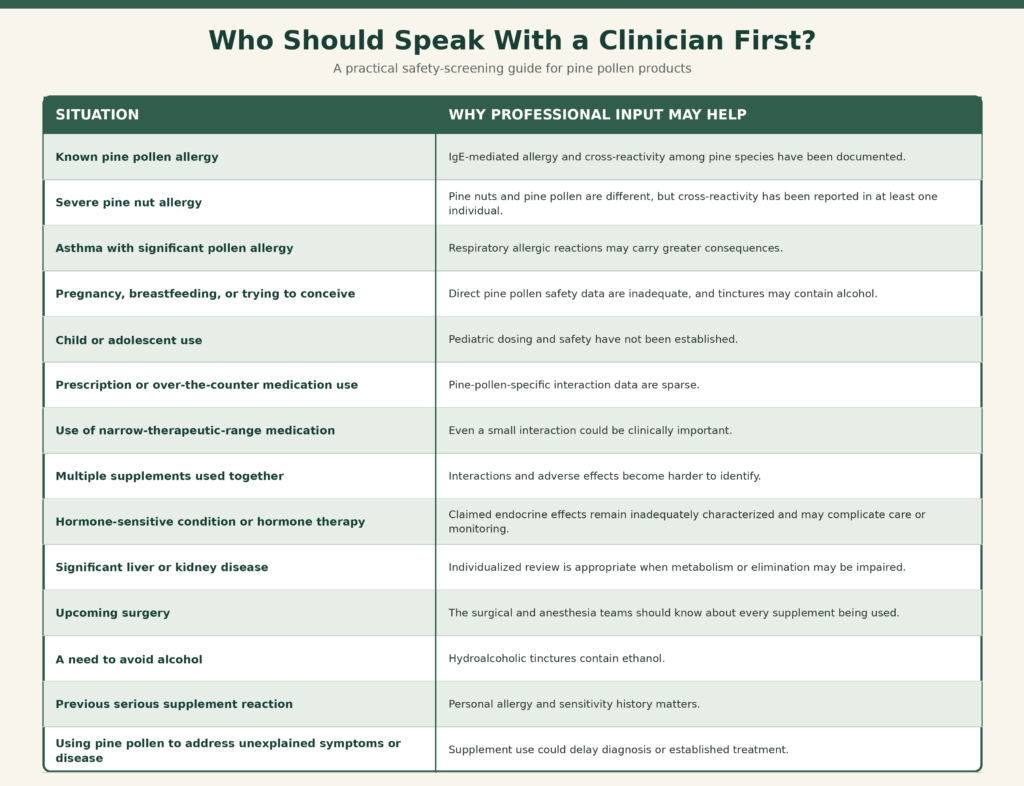
This table is a screening guide, not a diagnosis. The appropriate advice depends on the individual and the exact product.
Allergies and Asthma
Known pine pollen allergy
Pine pollen can cause genuine allergy. A study involving 65 people with pine pollen allergy identified several allergenic proteins and found substantial IgE cross-reactivity among the Pinus species examined.
IgE, or immunoglobulin E, is an antibody involved in many immediate allergic reactions.
If airborne pine pollen has caused wheezing, hives, swelling, or other significant allergic symptoms, deliberately consuming a concentrated pine pollen product deserves caution. An allergist is generally the most appropriate professional to evaluate this risk.
Product format should not be used as a guarantee of safety. Powders, capsules, and tinctures are different preparations, but there is not enough evidence to declare one format safe for a person with pine pollen allergy.
Severe pine nut allergy
Pine nuts and pine pollen are not the same material. Pine nuts are seeds, while pollen is male reproductive material, and their allergen profiles differ.
However, a published case involving pine nut anaphylaxis found IgE recognition of components in both pine nut and pine pollen extracts. This does not show that everyone with pine nut allergy will react to pine pollen. It does provide a reason for someone with a severe pine nut allergy to consult an allergist rather than test pine pollen at home.
Asthma associated with pollen exposure
People whose asthma is triggered or worsened by pollen should be especially cautious, particularly when asthma is poorly controlled or previous exposure has caused wheezing.
This is not proof that consuming pine pollen will trigger an asthma attack. It is a risk-management consideration: respiratory reactions may have serious consequences, and individual evaluation is more appropriate than experimentation.
Pregnancy, Breastfeeding, and Children
Pregnancy and breastfeeding
Robust pregnancy and lactation studies of pine pollen supplements are lacking. More broadly, the National Center for Complementary and Integrative Health (NCCIH) notes that many dietary supplements have not been tested in pregnant people, nursing mothers, or children.
Hydroalcoholic tinctures present an additional consideration because they contain ethanol.
Anyone who is pregnant, breastfeeding, or trying to conceive should discuss the exact pine pollen product with an obstetric clinician, pharmacist, or another qualified healthcare professional before use.
Children and adolescents
Children should not simply receive a reduced adult serving. Body size, organ development, metabolism, immune responses, and medication handling differ between children and adults.
Pine pollen dosing and safety have not been established in pediatric populations. Alcohol-containing tinctures require additional consideration. A qualified pediatric clinician should be involved before a child or adolescent uses a pine pollen supplement.
Medications and Supplement Combinations
Prescription and over-the-counter medications
Dietary supplements can sometimes increase or reduce the effects of medicines. The central issue with pine pollen is uncertainty: pine-pollen-specific interaction studies are sparse.
“No interaction has been documented” is not the same as “this has been proven not to interact.”
If you use prescription or over-the-counter medication—especially several medicines—ask a pharmacist or clinician to review the exact product. Bring the label rather than asking only about “pine pollen.”
Medications with a narrow therapeutic range
Some medications have a narrow therapeutic range, meaning the amount needed for benefit is relatively close to the amount that may cause unwanted effects.
NCCIH identifies medicines such as warfarin, digoxin, cyclosporine, phenytoin, and carbamazepine as examples for which supplement interactions can be particularly important. This does not mean pine pollen has been shown to interact with these medicines. It means there is less room for uncertainty when even a small interaction could matter.
Multiple supplements at once
Starting pine pollen alongside several other supplements makes any subsequent problem harder to interpret. If sleep changes, heart rate increases, digestive symptoms develop, or a laboratory value changes, identifying the responsible product may be difficult.
Combining botanicals can also create interactions that have never been formally studied. A pharmacist or clinician should review the complete supplement and medication list—not pine pollen in isolation.
Hormone-Sensitive Conditions and Hormone Therapy
Pine pollen is frequently marketed with hormone-related claims. Steroid-related compounds have been identified in pine material, but evidence that ordinary commercial pine pollen products produce clinically meaningful hormonal effects in humans remains inadequate.
That uncertainty matters when someone has a condition or treatment in which hormone signaling is clinically important. Examples may include hormone-sensitive cancers, certain prostate conditions, endometriosis, fertility treatment, or other endocrine disorders.
The concern here is precautionary. Current evidence does not establish that pine pollen causes or worsens these conditions.
The same caution applies to people receiving testosterone, estrogen, anti-androgen therapy, fertility medication, or another endocrine treatment. Adding a supplement marketed for hormonal activity could complicate symptom assessment or laboratory monitoring. The clinician managing the condition should know about its use.
Medical Conditions, Surgery, and Alcohol
Significant liver or kidney disease
Human data on how pine pollen preparations are absorbed, metabolized, and eliminated are limited. There is no strong evidence that ordinary pine pollen use inherently damages the liver or kidneys, but people with significant impairment may process substances differently from healthy adults.
This is a reason for individualized review—not evidence of known pine pollen toxicity.
Upcoming surgery
People sometimes omit supplements from their preoperative medication list. NCCIH advises disclosing dietary supplements before surgery because some supplements can affect bleeding, anesthesia, blood pressure, heart rate, or medicines used around the procedure.
Pine pollen has not been shown to cause all of these effects. Its perioperative interaction profile has simply not been comprehensively studied.
Tell your surgeon and anesthesia team exactly what you use. Let them determine whether it should be stopped and when; do not choose a discontinuation schedule on your own.
Alcohol-containing tinctures
Pine pollen tinctures commonly use ethanol as an extraction solvent. The serving may be small, but the alcohol is still present.
An alcohol-containing product may be inappropriate because of pregnancy, liver disease, medication interactions, recovery from alcohol-use disorder, religious or personal preference, or specific medical advice. Plain powder does not inherently contain the ethanol found in a hydroalcoholic tincture, although it presents its own product-quality and allergy considerations.
Previous serious reactions to supplements
A history of hives, angioedema, breathing difficulty, anaphylaxis, severe gastrointestinal symptoms, or significant unexplained laboratory abnormalities after using a supplement warrants additional caution.
Angioedema is deeper swelling beneath the skin, commonly involving the lips, face, or tongue.
A previous reaction does not prove that pine pollen will cause another one. It does mean that repeated unsupervised experimentation is unwise.
Using Pine Pollen to Treat Symptoms or Disease
Trying a dietary supplement for general wellness is different from using one instead of medical evaluation or established treatment.
Pine pollen should not be used as a substitute for diagnosis or treatment of low testosterone, infertility, erectile dysfunction, diabetes, high cholesterol, cancer, prostate disease, immune disorders, or another medical condition.
Fatigue, reduced libido, erectile dysfunction, fertility problems, or menstrual changes are sometimes described online as obvious evidence of a hormonal problem. In reality, these symptoms may have many causes, including sleep disorders, medication effects, thyroid disease, depression, cardiovascular or metabolic disease, relationship factors, and other medical conditions.
The safer sequence is:
Understand the problem first. Then decide with appropriate guidance whether supplementation belongs in the plan.
What About a Healthy Adult Taking No Medication?
Risk exists on a spectrum. A healthy adult with no known pine allergy, major medical condition, relevant medication, pregnancy, or upcoming surgery may have fewer reasons for individualized screening.
That does not establish that pine pollen is risk-free. Long-term and product-specific human safety data are limited, and commercially sold products may differ from materials examined in research. Product identity, purity, contaminant testing, serving size, and format still matter.
Avoid blanket conclusions in either direction. Limited evidence does not prove universal danger, but it also does not establish universal safety.
Who Should You Ask?
Different healthcare professionals can answer different questions.
A pharmacist
Particularly useful for medication interactions, alcohol-containing tinctures, and complicated supplement combinations.
An allergist
Particularly useful for known pine pollen allergy, severe pine nut allergy, previous anaphylaxis, and unexplained reactions to pollen products.
A primary-care clinician
Useful for general risk assessment, unexplained symptoms, chronic health conditions, and coordinating supplementation with existing care.
The specialist managing your condition
An endocrinologist, oncologist, hepatologist, nephrologist, fertility specialist, obstetric clinician, surgeon, or another specialist may be best positioned to advise when pine pollen overlaps with existing treatment.
Bring the Bottle, Not Just the Ingredient Name
“Pine pollen” alone is too vague for a useful product review. Bring or photograph:
- The exact product name
- The botanical species, if disclosed
- The product format: powder, capsule, or tincture
- The serving size
- The extraction ratio, if applicable
- The alcohol percentage, if applicable
- The complete ingredient list
- The Supplement Facts panel
- A Certificate of Analysis, if available
- A list of every medication and supplement you currently use
- Two products labeled “pine pollen” may be substantially different preparations. The exact label matters.
When Symptoms Require Urgent Help
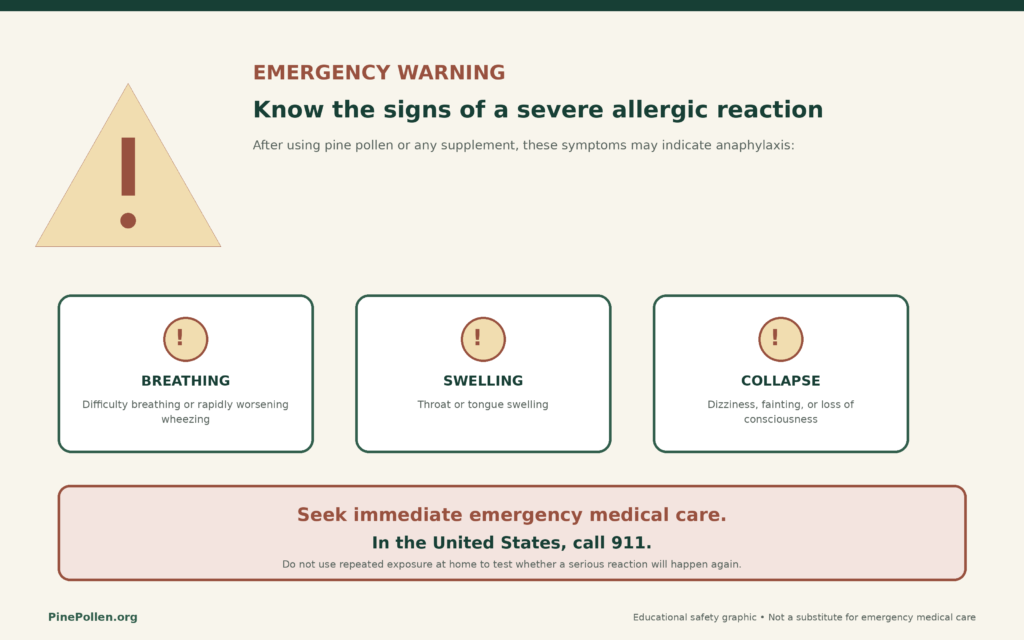
Seeking advice before use is preventive. Developing symptoms after use is different.
Emergency warning: Difficulty breathing, wheezing that is rapidly worsening, swelling of the throat or tongue, fainting, or other signs of anaphylaxis require immediate emergency medical care. In the United States, call 911. Do not use repeated exposure at home to determine whether a serious reaction will happen again.
Stop using the product and seek medical advice if you develop a concerning reaction that is not immediately life-threatening.
What the Evidence Allows Us to Say
The current evidence supports several careful conclusions:
- Pine pollen allergy is real, and IgE cross-reactivity among several Pinus species has been documented.
- Pine nut and pine pollen allergy are different, but cross-reactivity has been reported in an individual case.
- Medication–supplement interactions are a legitimate general concern, particularly around narrow-therapeutic-range medicines and surgery.
- Pregnancy, breastfeeding, childhood, long-term use, and pine-pollen-specific drug interactions contain substantial evidence gaps.
The evidence does not establish that pine pollen interacts with every medicine, causes hormone-sensitive disease, damages the liver or kidneys in ordinary users, or requires every healthy adult to obtain medical clearance before use.
Precision matters in both directions.
Frequently Asked Questions:
Is pine pollen safe for everyone?
No supplement can be assumed safe for everyone. Pine-pollen-specific human safety evidence is limited, and risk depends on allergies, medical conditions, medications, age, pregnancy status, product quality, and product format.
Should people with seasonal allergies avoid pine pollen?
Not every seasonal allergy is an allergy to pine. However, anyone with known pine pollen allergy, pollen-triggered asthma, or a history of serious allergic reactions should consult an allergist before consuming pine pollen.
Is a pine pollen tincture safer than pine pollen powder for allergies?
There is not enough evidence to make that claim. Processing changes the preparation, but no pine pollen format should be assumed safe for someone with a known allergy without professional guidance.
Is pine nut allergy the same as pine pollen allergy?
No. Pine nuts are seeds and pine pollen is reproductive pollen. Their allergens differ, although limited case evidence suggests that cross-reactivity can occur in some circumstances.
Can pine pollen interact with medication?
Pine-pollen-specific interaction studies are sparse. That uncertainty is why people taking medication—especially medicines with a narrow therapeutic range or several medicines at once—should ask a pharmacist or clinician to review the exact product.
How long before surgery should I stop using pine pollen?
There is no well-established pine-pollen-specific interval. Tell the surgeon and anesthesia team what you take and follow their instructions about whether and when to stop it.
Can pine pollen replace treatment for low testosterone or another condition?
No. Pine pollen should not replace diagnostic evaluation or established medical treatment. Symptoms attributed to hormones may have many different causes.
Safety Depends on the Person and the Product
Pine pollen is only one part of the safety equation. The person using it—and the exact preparation—matters just as much.
A pine pollen powder used by a healthy adult is a different situation from the same product used by someone with a known pine allergy. A hydroalcoholic tincture used by someone taking no medication is different from one added to a complex medication regimen. A supplement used out of curiosity is also different from one used in place of medical care for unexplained symptoms.
The best approach is individualized risk assessment:
Do not ask only whether pine pollen is natural. Ask whether this particular product makes sense for this particular person.
References and Further Reading
- Gastaminza G, Lombardero M, Bernaola G, et al. Allergenicity and cross-reactivity of pine pollen. Clinical & Experimental Allergy. 2009. PubMed
- van der Veen MJ, van Ree R, Aalberse RC, et al. Possible cross-reactivity between pine nuts and pine pollen. Journal of Allergy and Clinical Immunology. 2000. PubMed
- Cabanillas B, Novak N. Allergy to pine nuts and other seeds. Current Allergy and Asthma Reports. 2015. PubMed
- National Center for Complementary and Integrative Health. Using Dietary Supplements Wisely
- National Center for Complementary and Integrative Health. How Medications and Supplements Can Interact
- National Center for Complementary and Integrative Health. Some Medication–Supplement Interactions Can Be Serious
Editorial and Medical Disclaimer
This article is provided for educational and informational purposes only. It is not medical advice and is not intended to diagnose, treat, cure, or prevent any disease. Pine pollen products may not be appropriate for everyone. Consult a qualified healthcare professional before using a dietary supplement, particularly if you have allergies, are pregnant or breastfeeding, take medication, or have a medical condition.
Related Reading
- Pine Pollen Allergy: What We Actually Know
- What Is Pine Pollen?
- Which Pine Species Are Used for Pine Pollen?
- What Does the Research Actually Show?
- Pine Pollen Powder vs. Tincture
PinePollen.org | Educational Article