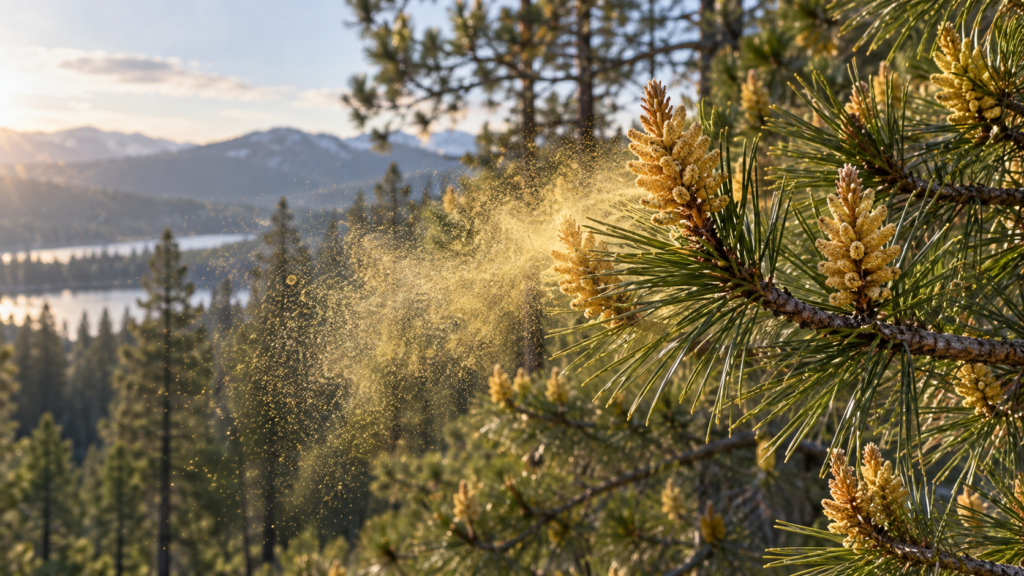
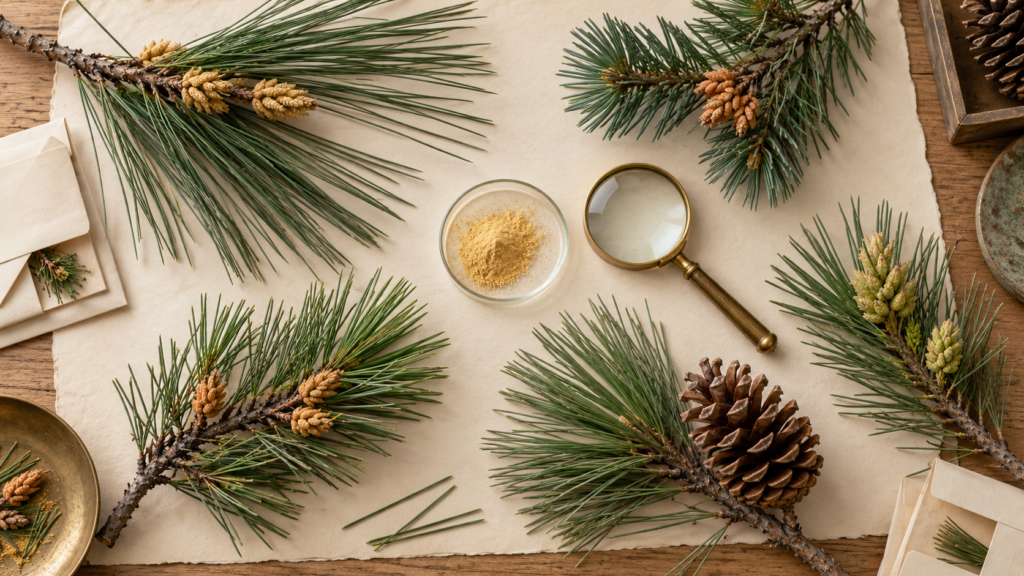
There are more than 100 species in the genus Pinus, but they are not all equally common as sources of harvested pine pollen. In commercial products and Chinese food and botanical traditions, a much smaller group of species appears again and again.
The two names you are most likely to encounter are Pinus massoniana and Pinus tabuliformis. Other pine species may also be used, but knowing the botanical source is one of the easiest ways to understand what you are actually buying.
Key Takeaways
- “Pine pollen” is a general category, not the name of one species.
- Pinus massoniana and Pinus tabuliformis are the species most commonly associated with Chinese pine pollen materials.
- Other pine species may appear in scientific, regional, or commercial contexts.
- Species identification is important, but it does not replace testing for purity and contaminants.
- Look for the complete botanical name when comparing products.
Table of Contents
- “Pine Pollen” Is a Category, Not a Species
- Masson Pine: The Name You Will See Most Often
- Why Pinus massoniana Matters
- Chinese Pine: The Other Major Species
- So Which of the Two Is Better?
- What About Yunnan Pine?
- And What About Scots Pine?
- Can Other Pine Species Be Used?
- A Quick Guide to the Main Species
- Why the Latin Name on a Label Matters
- Species Is Only the Beginning
- Frequently Asked Questions
- References and Further Reading
“Pine Pollen” Is a Category, Not a Species
The first thing worth clearing up is the name itself.
“Pine pollen” simply means pollen produced by a tree in the genus Pinus. It does not identify a single plant species.
That is similar to saying “oak leaves.” There are many kinds of oak, and the common name alone does not tell you which one you are dealing with.
The same is true here.
Different pine species grow in different climates, develop at different rates, and may differ in pollen morphology and chemical composition. For that reason, botanical identification matters much more than the broad phrase “pine pollen” might suggest.
Masson Pine: The Name You Will See Most Often

Pinus massoniana, commonly called Masson pine, is one of the most important species associated with commercially harvested pine pollen.
It is native to large areas of southern and central China, where it is a familiar forest tree rather than an exotic botanical curiosity.
Masson pine is a fast-growing conifer that can form extensive stands. It tolerates relatively warm conditions compared with many northern pines and has long been important for timber, resin, forestry, and other uses.
Its pollen is also one of the principal botanical sources associated with Chinese pine pollen products and traditions.
If you spend time comparing pine pollen powders and tinctures, you will notice that Pinus massoniana appears on ingredient labels more frequently than most other species.
That makes it especially useful to recognize the name rather than treating it as decorative Latin on the bottle.
Why Pinus massoniana Matters
There are a few practical reasons Masson pine has become closely associated with pine pollen.
The species occurs across large forested areas, produces substantial amounts of pollen, and has an established history of collection and use in China.
Published reviews describing the Chinese Pharmacopoeia identify Pinus massoniana, Pinus tabuliformis, and other plants in the same genus as botanical sources of pine pollen.
That does not mean P. massoniana is automatically superior to every other pine species.
It means its botanical identity and history of use are relatively well established, which makes it a logical reference point when discussing commercial pine pollen.
Chinese Pine: The Other Major Species
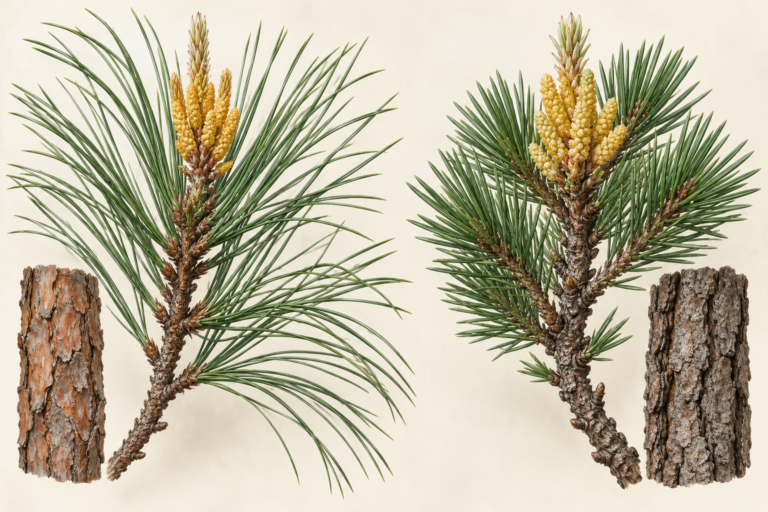
The second name to remember is Pinus tabuliformis, commonly called Chinese pine or sometimes Chinese red pine.
This species is native to northern and central China and generally grows in cooler, drier environments than Masson pine.
In the landscape, P. tabuliformis often develops the rugged, irregular shape many people associate with mature mountain pines.
Its pollen has a documented history of traditional use, and published reviews identify it alongside Pinus massoniana as one of the principal sources associated with pine pollen used as a food and traditional botanical material in China.
So Which of the Two Is Better?
This is where product marketing can make things unnecessarily confusing.
There is no good botanical reason to declare that one species is universally “better” simply because its name sounds more specialized.
A more useful comparison looks at:
- Correct species identification
- Geographic origin
- Harvest timing
- Pollen purity
- Drying and processing methods
- Storage conditions
- Contaminant testing
- Whether the finished product is powder or extract
In practice, a clearly identified and well-tested botanical material is more meaningful than a vague claim that one pine species is inherently more “potent.”
Species matters, but quality does not stop at species.
What About Yunnan Pine?
Pinus yunnanensis, or Yunnan pine, is another Chinese pine species that appears in scientific discussions of pine pollen.
As its common name suggests, it is strongly associated with southwestern China, particularly Yunnan and neighboring regions.
Researchers studying pine pollen morphology may compare P. yunnanensis with species such as P. massoniana and P. tabuliformis to examine differences among their pollen grains.
You may encounter Yunnan pine in scientific and regional discussions of pine pollen, but it is less consistently identified as a principal commercial source than Masson pine and Chinese pine.
That distinction is worth keeping in mind.
And What About Scots Pine?
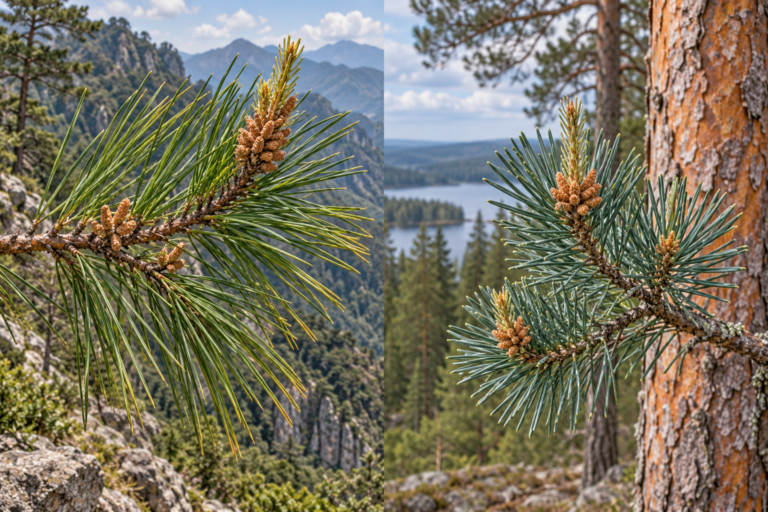
Pinus sylvestris, commonly known as Scots pine, is one of the most widely distributed pine species in the world.
It grows naturally across a huge portion of Europe and Asia and is familiar to gardeners, foresters, and plant enthusiasts throughout the Northern Hemisphere.
Scots pine certainly produces pollen, and its pollen is widely studied in botany, aerobiology, allergy research, and forestry.
However, its presence in botanical literature should not be confused with the Chinese pine pollen materials most commonly associated with P. massoniana and P. tabuliformis.
This is an important example of why context matters.
A species may produce abundant pollen and be scientifically studied without being the standard source used for a particular commercial botanical product.
Can Other Pine Species Be Used?
Yes. Published definitions also include pollen from other plants in the genus Pinus. This creates some botanical flexibility in what may be described under the traditional category of pine pollen, but it does not make every pine species equivalent.
Different Pinus species can vary in pollen size, structure, chemistry, geography, and harvest characteristics.
If a manufacturer uses another species, the botanical name should ideally be disclosed rather than hidden behind the generic phrase “pine pollen.”
A Quick Guide to the Main Species
- *Pinus massoniana* — Masson pine: One of the principal traditional and commercial sources of pine pollen, especially in China.
- *Pinus tabuliformis* — Chinese pine: Another principal source associated with Chinese pine pollen products and traditions.
- *Pinus yunnanensis* — Yunnan pine: A Chinese species discussed in pollen research and regional use, but less commonly presented as a principal commercial source.
- *Pinus sylvestris* — Scots pine: A widespread Eurasian pine whose pollen is extensively studied, though it is not a primary species associated with Chinese pine pollen products.
- Other *Pinus* species: May be used depending on the region and product, making botanical identification particularly important.
Why the Latin Name on a Label Matters
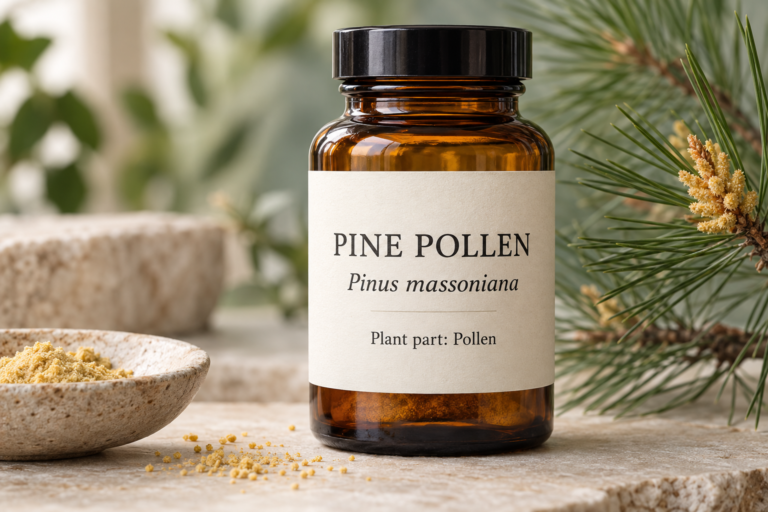
Botanical names may look intimidating at first, but they solve a very practical problem.
Common names are inconsistent.
“Chinese pine,” “red pine,” and even “pine pollen” can mean different things depending on the supplier, language, or region.
A scientific name such as Pinus massoniana gives you a much clearer reference.
Think of it as the plant’s international identification card.
When you are comparing botanical products, that little italicized name can tell you more than a large amount of marketing language printed elsewhere on the package.
Species Is Only the Beginning
Once you know which pine species produced the pollen, the next questions become much more useful.
Where was it grown?
How was it harvested?
Was the pollen cleaned and tested?
Was it sold as whole pollen, cracked-cell powder, or extracted into a tincture?
Those details often tell you more about the finished product than a broad statement about “premium pine pollen.”
The strongest starting point is simple: know the plant.
For pine pollen, that usually means becoming familiar with Pinus massoniana and Pinus tabuliformis first, while recognizing that other members of the genus Pinus may also be used.
Of these species, Pinus massoniana appears especially frequently on commercial pine pollen labels. To understand why, continue with our guide: What Is Pinus massoniana?
Frequently Asked Questions:
Is pine pollen collected from every pine species?
No. Every pine species produces pollen as part of its reproductive cycle, but that does not mean pollen from every species is routinely harvested for food, botanical, or commercial use. Commercial products are more commonly associated with a smaller group of species, particularly Pinus massoniana and Pinus tabuliformis.
What is the most commonly used pine pollen species?
Pinus massoniana, or Masson pine, is one of the species most frequently identified on commercial pine pollen products. Pinus tabuliformis, or Chinese pine, is another principal source associated with Chinese pine pollen traditions and products.
What is the difference between Pinus massoniana and Pinus tabuliformis?
They are separate pine species with different geographic ranges and growing conditions. Masson pine is associated primarily with warmer areas of southern and central China, while Chinese pine is native mainly to northern and central China. Both are commonly discussed as botanical sources of pine pollen.
Can Scots pine pollen be used in supplements?
Scots pine produces pollen and its pollen has been extensively studied. However, its presence in scientific literature does not establish that it is a standard source for the Chinese pine pollen materials commonly associated with P. massoniana and P. tabuliformis. A product using Scots pine should identify the species clearly and provide appropriate quality information.
Why should a pine pollen label include the botanical name?
Common names can vary by language, supplier, and region. The botanical name provides a more precise identification of the source species and makes it easier to compare the product with published research, traditional-use references, and other products.
References and Further Reading
- Cheng Y, et al. “Pine pollen: A review of its chemical composition, health effects, processing, and food applications.” Trends in Food Science & Technology. 2023;138:599–614. View DOI record
- Liang S-B, et al. “The Potential Effects and Use of Chinese Herbal Medicine Pine Pollen (Pinus pollen): A Bibliometric Analysis of Pharmacological and Clinical Studies.” World Journal of Traditional Chinese Medicine. 2020. View full text
- Farjon A. A Handbook of the World’s Conifers. Brill; 2010.
- Royal Botanic Gardens, Kew. Plants of the World Online: Pinus massoniana, Pinus tabuliformis, Pinus yunnanensis, and Pinus sylvestris. View database
- Wang T, et al. “Key identifying characteristics for seven taxa of pine pollen in China.” Review of Palaeobotany and Palynology. 2026. View abstract
Editorial and Medical Disclaimer
This article is provided for educational and informational purposes only. It is not medical advice and is not intended to diagnose, treat, cure, or prevent any disease. Pine pollen products may not be appropriate for everyone. Consult a qualified healthcare professional before using a dietary supplement, particularly if you have allergies, are pregnant or breastfeeding, take medication, or have a medical condition.
Related Reading
- What Is Pine Pollen? A Botanical Guide to Pine Tree Pollen
- What Is Pinus massoniana?
- Where Masson Pine Grows
- Pine Pollen Harvesting Season
- Wild vs. Cultivated Pine Pollen
PinePollen.org | Educational Article